Vapor Trails Home

Category

Craft & Analysis

20 articles

The Open Door We Dare Not Close: Speculative Fiction's Deepening Resistance to Final Answers

The Open Door We Dare Not Close: Speculative Fiction's Deepening Resistance to Final Answers

Contemporary science fiction has developed a pronounced allergy to resolution, consistently pulling back from the threshold of definitive conclusions. This reluctance is not merely an aesthetic preference — it mirrors a cultural paralysis around irreversible decisions in an age of technological lock-in. The refusal to end, this essay argues, may itself constitute the genre's most quietly dystopian gesture.
When Every Door Is Open: Speculative Fiction and the Tyranny of the Calculable Future

When Every Door Is Open: Speculative Fiction and the Tyranny of the Calculable Future

Contemporary science fiction is quietly rewriting the architecture of heroism, replacing decisive action with a protagonist frozen at the threshold of infinite possibility. When the future becomes fully legible — mapped by algorithms, branched by quantum probability, rendered in exhaustive detail — the act of choosing transforms from liberation into its own form of captivity. This examination traces how speculative fiction has begun treating decision paralysis not as a character flaw, but as the

No Reason to Stay: How Speculative Fiction Forgot to Make the Future Livable

No Reason to Stay: How Speculative Fiction Forgot to Make the Future Livable

Contemporary speculative fiction has grown preoccupied with leaving—escaping collapsing cities, transcending dying bodies, fleeing broken societies—while rarely asking what might make a world worth inhabiting in the first place. This piece examines whether that narrative obsession signals a failure of imagination or something more revealing about the cultural anxieties writers are quietly processing. The answer, it turns out, may say more about the present than any imagined future.

Moving at the Speed of Alone: How Speculative Fiction Turns Motion Into a Measure of Isolation

Moving at the Speed of Alone: How Speculative Fiction Turns Motion Into a Measure of Isolation

In speculative fiction's most resonant works, speed is not liberation — it is the precise instrument by which emotional distance is calculated. Characters hurtle through hyperspace, megacities, and digital corridors while remaining utterly stationary within themselves. This article examines how kinetic language has become one of the genre's most sophisticated tools for rendering loneliness as something you can almost touch.

Suspended in the Interval: How Speculative Fiction Transforms the Quiet Before Catastrophe Into Its Most Potent Weapon

Suspended in the Interval: How Speculative Fiction Transforms the Quiet Before Catastrophe Into Its Most Potent Weapon

The most devastating moments in speculative fiction often arrive not in fire or collapse, but in the unbearable stillness that precedes them. Across the genre's most celebrated works, writers have discovered that the pause before transformation carries a psychological weight no explosion can replicate. This is an examination of how silence, suspension, and the held breath of anticipation have become the genre's most sophisticated tools of dread.

Before You Can Catch It: How Speculative Fiction Turns Conceptual Speed Into a Form of Dread

Before You Can Catch It: How Speculative Fiction Turns Conceptual Speed Into a Form of Dread

The most unsettling quality of contemporary speculative fiction is not what it predicts but how quickly its predictions compound before a reader can interrogate them. Writers have learned to use narrative acceleration as a structural weapon, stacking implications so rapidly that comprehension itself becomes a casualty. This piece examines how that deliberate velocity functions—and what it costs us to keep pace.

The Beauty of What Remains: How Science Fiction Finds Its Soul in the Act of Leaving

The Beauty of What Remains: How Science Fiction Finds Its Soul in the Act of Leaving

Science fiction has long been understood as a literature of arrival—of new worlds, new technologies, and new civilizations waiting just beyond the horizon. Yet the genre's most emotionally durable moments are rarely found in what lies ahead. They are found in what has been surrendered, dismantled, or simply left to decay in the wake of human progress.

Running Past the Answer: Why Speculative Fiction Moves Faster Than Its Own Meaning

Running Past the Answer: Why Speculative Fiction Moves Faster Than Its Own Meaning

The most compelling speculative fiction of our era does not arrive at conclusions so much as it accelerates past them, leaving readers suspended in a momentum that feels less like narrative tension and more like cultural vertigo. This structural restlessness — once considered a flaw in plotting — has quietly become one of the defining signatures of serious speculative work. Understanding why requires looking not at where these stories end, but at what they refuse to slow down long enough to reso

Crushed by the Clock: How Speculative Fiction Makes Time Something You Can Feel

Crushed by the Clock: How Speculative Fiction Makes Time Something You Can Feel

In the most compelling speculative fiction being written today, time has ceased to function as a neutral stage upon which events unfold. Instead, it has become a substance—something that accumulates, erodes, and exerts pressure on the bodies and minds of characters who can no longer outrun it. This analysis examines the literary techniques writers use to transform invisible temporal force into something readers can almost physically sense.

Closer Than Comfort: The Unsettling Precision of Science Fiction's Unintended Forecasts

Closer Than Comfort: The Unsettling Precision of Science Fiction's Unintended Forecasts

There is a particular unease that settles in when a speculative fiction novel, written years before a given technology or social rupture materialized, describes that future with uncanny specificity. This article examines how writers like Ted Chiang and N.K. Jemisin have arrived at tomorrow not through prediction but through disciplined extrapolation and cultural attunement—and what that convergence reveals about the imaginative machinery behind the genre.

No Place Left to Land: How Speculative Fiction Lost Its Faith in the World It Already Has

No Place Left to Land: How Speculative Fiction Lost Its Faith in the World It Already Has

Contemporary speculative fiction has grown increasingly preoccupied with departure—from Earth, from the body, from consensus reality itself. This essay examines what that literary fixation reveals about a deeper cultural exhaustion with institutional life, and asks whether the genre's relentless imagination of escape has quietly made transformation seem less possible than abandonment.

When the Record Lies: Speculative Fiction's Assault on the Myth of the Stable Archive

When the Record Lies: Speculative Fiction's Assault on the Myth of the Stable Archive

Contemporary speculative fiction is no longer content to imagine alternate pasts as escapist fantasy. Instead, a growing body of work treats the archive itself—the document, the database, the institutional record—as the primary site of ideological warfare, forcing readers to confront how fragile the foundations of collective memory truly are.

The Grammar of Absence: How Speculative Fiction Turns Silence Into Its Most Powerful Sentence

The Grammar of Absence: How Speculative Fiction Turns Silence Into Its Most Powerful Sentence

The most arresting moments in speculative fiction are often the ones where nothing is said at all. Through deliberate pacing, strategic white space, and the careful architecture of narrative pause, writers like N.K. Jemisin and Liu Cixin have transformed silence from a void into a weapon. This analysis examines how the gaps between words carry a weight that language alone cannot.

Ghosts of Tomorrow: How Speculative Fiction Navigates the Wreckage of Abandoned Futures

Ghosts of Tomorrow: How Speculative Fiction Navigates the Wreckage of Abandoned Futures

Contemporary science fiction is increasingly preoccupied not with imagining the future, but with sorting through the debris of futures that never arrived. By placing characters inside worlds shaped by broken promises and unintended consequences, a new generation of speculative writers is mapping the peculiar condition of living in permanent transition—neither the catastrophe we braced for nor the paradise we designed.

After the Landing: Why Speculative Fiction Cannot Finish the First Contact Story

After the Landing: Why Speculative Fiction Cannot Finish the First Contact Story

First contact narratives have long been among speculative fiction's most ambitious undertakings, yet the genre keeps stumbling at the finish line. Whether the story collapses into conquest or dissolves into utopian harmony, writers seem constitutionally unable to sit with the unglamorous, unresolved middle ground that genuine contact would almost certainly produce. This piece examines why that failure is so persistent—and what a handful of recent works are doing differently.

Narrators Who Lie: How Speculative Fiction Weaponizes Distrust to Map Our Epistemic Crisis

Narrators Who Lie: How Speculative Fiction Weaponizes Distrust to Map Our Epistemic Crisis

The most unsettling futures in contemporary speculative fiction are not built from catastrophe but from confusion—narrators who cannot be trusted, memories that contradict themselves, and artificial intelligences that reframe truth as a matter of perspective. This analysis examines how the unreliable narrator has evolved from a literary device into an urgent diagnostic tool for a culture drowning in misinformation and manufactured reality.

Signal Without Substance: Speculative Fiction's Portrait of the Digitally Connected, Emotionally Adrift

Signal Without Substance: Speculative Fiction's Portrait of the Digitally Connected, Emotionally Adrift

Contemporary speculative fiction is constructing futures saturated with connectivity yet hollowed of genuine human contact. By embedding characters within relentlessly networked worlds, authors are revealing a paradox that feels uncomfortably familiar: the more tethered we become, the more profoundly alone we risk growing. This analysis examines how the genre's most thoughtful practitioners are transforming that contradiction into some of the most resonant literary architecture of our time.

Erased by Design: How Speculative Fiction Confronts the Hidden Cost of Forgetting

Erased by Design: How Speculative Fiction Confronts the Hidden Cost of Forgetting

Science fiction has long treated memory not merely as a narrative device but as contested territory—a battleground where identity, autonomy, and technological convenience collide. From Philip K. Dick's fractured protagonists to contemporary novels grappling with algorithmic self-erasure, the genre's preoccupation with forgetting speaks directly to our present anxieties about data ownership and digital consciousness. What these stories ultimately ask is not whether we can delete the past, but whe

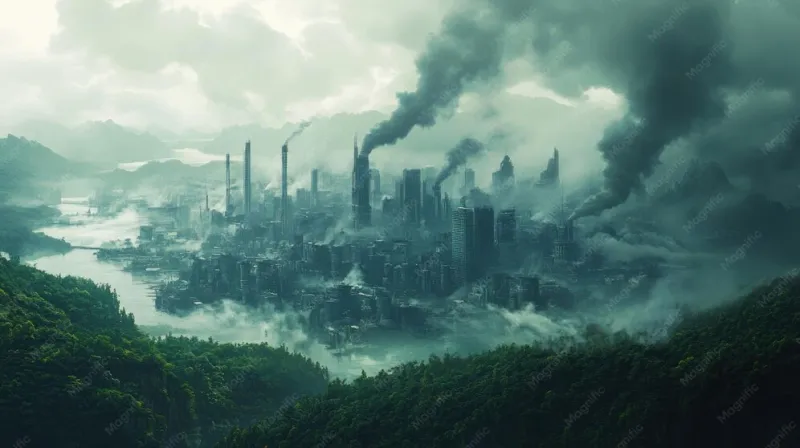
Breathing Ruins: How Speculative Fiction Writers Turn Dying Worlds Into Emotional Architecture

Breathing Ruins: How Speculative Fiction Writers Turn Dying Worlds Into Emotional Architecture

The most haunting science fiction doesn't merely describe a broken world—it makes you feel the weight of its atmosphere pressing against your chest. Across decades of speculative literature, authors have discovered that degraded environments function as far more than backdrop; they operate as psychological instruments. This piece examines the craft behind that singular, suffocating beauty.